Work and wellbeing in 2026: social skills become decisive
How will we organize work in 2026? How do we ensure high productivity, a thriving economy, and, if possible, that people actually enjoy their work? In an increasingly individualistic society, the workplace is a crucial element of the social infrastructure. Work plays a central role in people’s wellbeing. That is why we must ask a different question: how do we organize humanity in work?
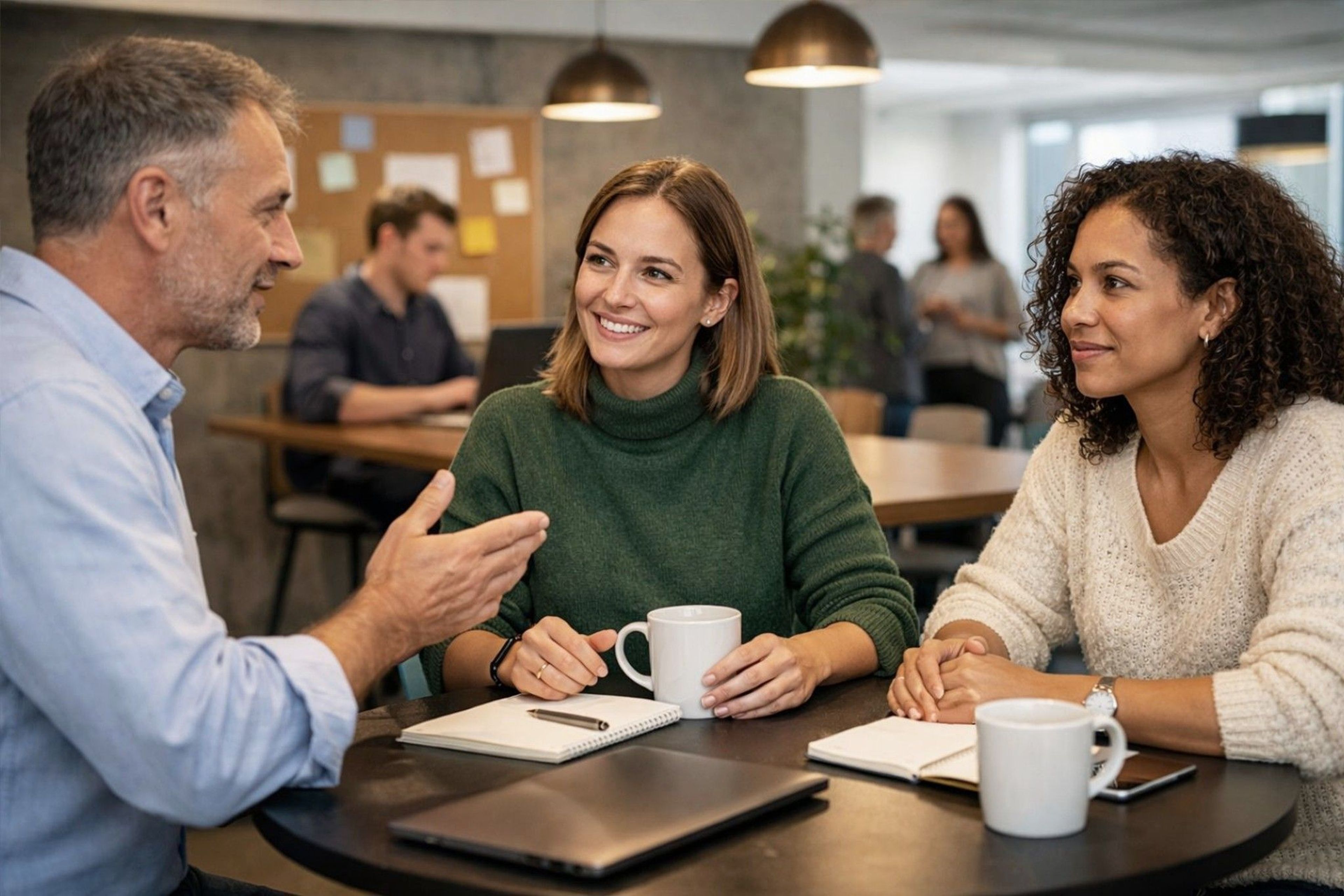
Bas Tomassen, CEO of Colbe, and Mayke Nagtegaal, CEO of the data-driven wellbeing platform TrueTribe, look ahead to work and wellbeing in 2026.
Tomassen: “Let’s start with some positive news: companies are paying increasing attention to preventing absenteeism. Both large organizations and SMEs are taking a more active role in monitoring employee wellbeing. Increasingly, care is being offered (pro)actively by employers. With this form of ‘employee assistance,’ we are seeing a shift from care provided by the public sector to care provided by the private sector.”
“Technological developments are also driving the rise of connective leadership; a term we’ll see more often in job postings. Knowledge is increasingly being partially replaced by AI, which means social skills will become decisive, both in leadership and on the shop floor.”
Every life stage has its own challenges
“But these developments do have less positive underlying causes. More people are struggling with life-stage-related issues. Think of informal caregiving, menopause, grief, or young parenthood. This leads to stress, mental complaints, and absenteeism, which is expected to rise from 5.3% to around 6%. Combined with labour market shortages, companies will simply have to act.”
Mayke Nagtegaal therefore advocates for absenteeism policies that are not focused solely on illness. “Organizations should have processes in place for stress, conflict, grief, or other situations in which someone is not functioning optimally without ‘calling in sick’ being the only alternative.”
From feeling to data
In addition, we need to rethink how we view absenteeism: “Absenteeism is unpleasant for everyone and costs a lot of money. Spending must be justified, so decisions in this area will increasingly be data-driven. Organizations currently focus mainly on absenteeism rates, which only tell us something about people who have already dropped out. The focus should shift to the working population: the 95–98% of employees who are present but may be struggling, disengaged, or at risk of absenteeism. With new data analyses and wellbeing measurements across multiple dimensions, you can see much more clearly who is ‘thriving,’ ‘coping,’ or ‘struggling.’ That’s where I believe the greatest gains in both productivity and wellbeing lie.”
Burnout is not a diagnosis
Following on from the need to be more specific about what people are struggling with, Nagtegaal also questions the current approach to burnout. “It’s a hollow term that solves little for both employees and employers. Burnout is mainly a symptom of underlying problems, not a diagnosis that truly helps people move forward. Real progress lies in a behavioural perspective on work and wellbeing: investigating what is really going on instead of clinging to a catch-all concept. My hope is that the industry will stop using burnout as a diagnosis and instead invite employees into more honest conversations about causes, coping mechanisms, and workload.”
Back to the office
Although working from home quickly became popular, more and more companies are reversing their policies. Tomassen doesn’t see remote work disappearing but rather evolving into a hybrid structure: “It will no longer be one or two days at the office and the rest at home, but a flexible structure within the day. This does require changes to the office itself. People who work from home a lot experience fatigue and feel they’re missing out on things at the office. At the same time, they don’t always feel the space or need to come in more often. As a result, workplaces will be redesigned with much more focus on meeting, collaboration, and informal connection.”
Looking ahead to 2026, one thing becomes clear: work is becoming less a place where we simply carry out tasks, and more an environment for connection. Technology can do a lot, but it is our social skills, our willingness to truly see what people need, and our ability to steer with nuance and data that will make the difference. Organizations that dare to embrace this shift by organizing work in a more human, flexible, and meaningful way, will not only create healthy teams, but also sustainable growth.