From absence management to work wellbeing
Colbe introduces the Work Wellbeing Capability Model
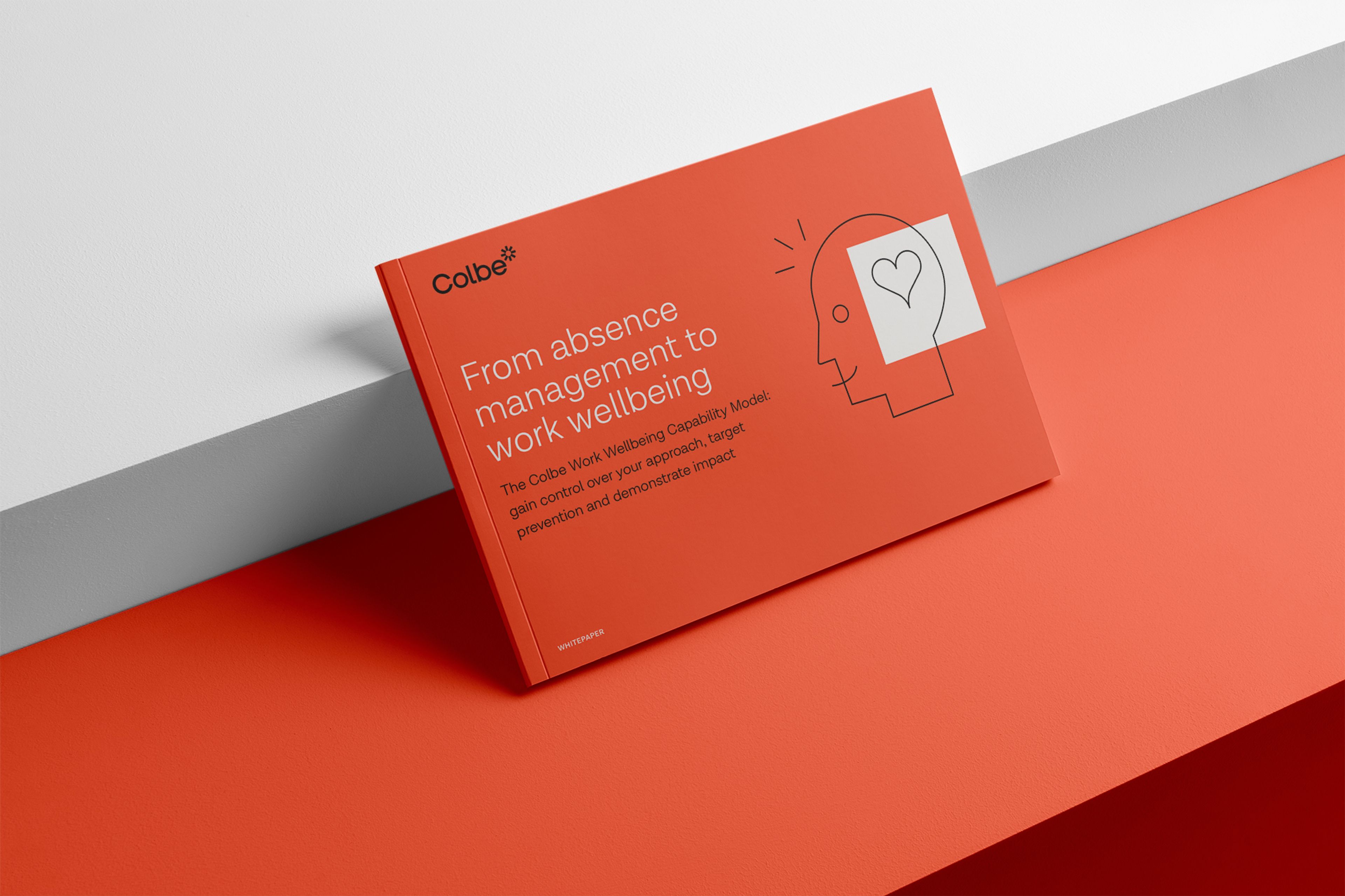
Colbe is publishing the whitepaper 'From absence management to work wellbeing'. It introduces the Work Wellbeing Capability Model, which helps organisations see where they stand and what steps to take next, backed by insight and data, concrete action and demonstrable impact.
Despite years of investment in reducing sickness absence, many organisations are still not seeing structural improvements. Colbe argues that absence management alone isn’t enough: organisations need to take a broader view and focus on 'work wellbeing'.
For Colbe, work should be a place where people can work healthily and productively, develop themselves and reach their potential. In practice, we are still a long way from that. Sickness absence is high, almost two million workers in the Netherlands are experiencing burnout symptoms, and absence due to mental health issues carries high costs every year. "Absence is often approached as a problem in isolation," explains Bas Tomassen, CEO of Colbe. "It is recorded and analysed, and interventions are put in place when someone drops out. That is mainly a response to an outcome, while the factors that come before it – workload, autonomy, leadership, job design and social dynamics – remain out of sight. At Colbe, we therefore believe we shouldn't just look back at who has dropped out, but should understand much earlier which conditions enable people to work sustainably."
Work wellbeing as a strategic priority
Colbe advocates a different way of looking at work and wellbeing, which it calls work wellbeing. Colbe defines work wellbeing as the extent to which work enables people to function in a healthy, connected, capable and meaningful way, so that they can make full use of their potential and contribute sustainably to the organisation and to society. From this perspective, absence isn’t an isolated problem of individual employees, but part of a broader system of work and organisation. That calls for an approach that goes beyond recording absence figures. Organisations need to know where risks arise, understand what lies behind them, take targeted action and then establish what works.
Six levels of maturity
To help organisations make this transition step by step, Colbe has developed the Work Wellbeing Capability Model. The model describes six levels of maturity, from Non-compliance to System Design, with Compliance, Awareness, Steering and Integration in between. The model shows where an organisation stands and what development is needed to take the next step. Arosha Brouwer, Chief Impact Officer at Colbe and TrueTribe: "With this model, we link work wellbeing to employee productivity. We make it measurable. And that's exactly what the board wants to see: figures, proven impact, data. Work wellbeing becomes a must-have."
From signals to results
In the whitepaper, Colbe explains how connecting absence data, HR data and information on, for example, employee satisfaction and engagement creates a more complete picture of the factors associated with work wellbeing. The real value comes when insights are translated into action and the effects of that action are measured. Nèwel Salet, Head of Science and Data at TrueTribe and occupational physician: "Data helps to reveal patterns. But data doesn't tell the whole story. I often put it this way: data shows you where the smoke is. Conversations show you where the fire is burning."
Download
The whitepaper 'From absence management to work wellbeing – Take the step with the Colbe Work Wellbeing Capability Model: get a grip on your approach, focus on prevention, demonstrate impact' is a publication by Colbe. The Work Wellbeing Capability Model is part of the whitepaper. Read the whitepaper here.